Diagnosis, Reconsidered: Inside America's Growing Second-Opinion Movement

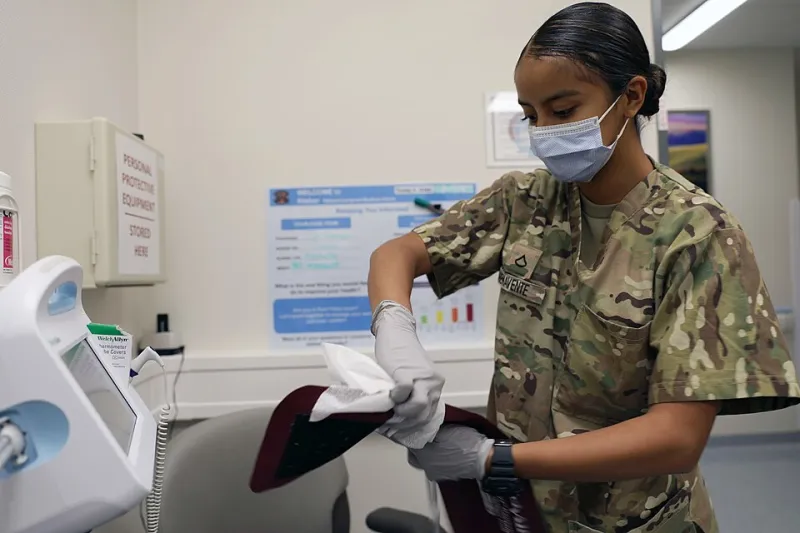
Photo: U.S. Air Force photo by Senior Airman Heidi Goodsell, Public domain, via Wikimedia Commons
When a 58-year-old schoolteacher from Minnesota was told she needed a spinal fusion for chronic back pain, her first instinct was to schedule the surgery. Her second instinct—prompted by her daughter—was to send her imaging and records to a spine center two states away. The reviewing surgeon disagreed with the original plan entirely, recommending six months of structured physical therapy instead. Two years later, she hasn't had surgery.
Stories like this are becoming more common, and not by accident. A wave of virtual second-opinion services, hospital-based review programs, and employer-sponsored diagnostic benefits has made having your diagnosis double-checked easier, faster, and often cheaper than at any point in modern medicine.
How Often Does the Diagnosis Actually Change?
The research on diagnostic revision is more sobering than most patients realize. A landmark study of second opinions at the Mayo Clinic found that in a sample of patients seeking internal medicine reviews, only about 12% received the same diagnosis they arrived with. The remainder received a refined or entirely different diagnosis.
Separate research on cancer pathology—where a second read of biopsy slides is standard practice in many systems—has found that discrepancies between initial and expert-review diagnoses occur in a meaningful minority of cases, sometimes altering treatment recommendations substantially. In radiology, studies of second-read programs have documented clinically significant missed findings on initial imaging at rates that surprised even the researchers conducting them.
None of this means your doctor is careless. Diagnostic medicine is probabilistic, information is often incomplete, and cognitive biases affect even the most diligent clinicians. It means that for serious or ambiguous conditions, a second look isn't an insult—it's quality control.
When a Second Opinion Is Worth the Effort
Not every diagnosis needs a review. You likely don't need three opinions on strep throat. The scenarios where experts consistently recommend seeking one include:
- Major treatment decisions with irreversible consequences, including surgery, chemotherapy regimens, and long-term medication courses with significant side effects.
- Rare or unusual conditions, where community physicians may see a handful of cases in a career while a specialist center sees dozens each month.
- Diagnoses that don't respond to treatment as expected. If your condition isn't improving on the planned course, reconsidering the diagnosis is often more productive than escalating the treatment.
- Any situation where you feel persistent, nagging uncertainty—even if you can't articulate why.
Patient advocates sometimes describe this as the "24-hour rule": for any major diagnosis, give yourself at least a day to absorb the news before committing to a treatment path. Rarely does a legitimate treatment plan collapse because you took a week to verify it.
The Rise of the Virtual Second Opinion
A growing number of academic medical centers now offer remote review programs: you upload your records, imaging, and pathology slides, and a specialist reviews the case and sends a written opinion—often within one to three weeks—without requiring travel. Employers increasingly cover these services as a benefit, recognizing that a corrected diagnosis can prevent an unnecessary surgery that costs six figures.
The advantages are real: access to subspecialists regardless of geography, a written report you can share with your treating physician, and no waiting room. The limitations are equally real: the reviewing specialist doesn't examine you, and a written opinion is not the same as an ongoing doctor-patient relationship. Virtual reviews work best as a complement to local care, not a replacement for it.
A Step-by-Step Guide to Getting It Done
Step 1: Tell your doctor. Frame it collaboratively: "Before we move forward, I'd like another expert to review my case." Ethical physicians expect this for major decisions, and many will recommend whom to see. A doctor who reacts defensively to a reasonable second-opinion request is itself useful information.
Step 2: Request your records. Under HIPAA, you're entitled to copies of your medical records, and providers may charge only a reasonable, cost-based fee. Submit a written records request to your provider's medical records department, specifying imaging (ask for the actual DICOM files or a disc, not just the report), pathology slides or blocks, lab results, and visit notes. Allow up to 30 days, though most offices comply faster.
Step 3: Choose the right reviewer. Look for physicians who focus specifically on your condition—ideally at an academic medical center or a high-volume specialty center. Volume matters: surgeons who perform a procedure frequently have different perspectives than those who perform it rarely.
Step 4: Check your insurance. Many plans cover in-network second opinions, and some states require coverage for them in specific circumstances. For virtual review programs, ask whether the service bills insurance or charges a flat fee, and whether your plan will reimburse it. Keep records of everything.
Step 5: Bring the results back to your primary team. A second opinion that never reaches your treating physician changes nothing. Request a follow-up appointment to discuss how the review affects your plan.
What If the Two Opinions Disagree?
Disagreement between experts is common and doesn't necessarily mean one doctor is wrong. Medicine often involves genuine judgment calls—whether a borderline finding warrants treatment now or watchful waiting, for instance. When opinions diverge, ask each physician to explain the reasoning behind their recommendation and what evidence would favor the other approach. A third opinion, ideally at a center known for the condition, can break a true deadlock.
The Bottom Line
A diagnosis is not a verdict; it's a working hypothesis, tested and refined by evidence and sometimes by a second set of eyes. With diagnostic change documented at meaningful rates for complex conditions, and with access to expert review easier than ever, the question for American patients facing a serious diagnosis is shifting from "Should I get a second opinion?" to "Why wouldn't I?"