The Chart You've Never Read: What Lives Inside Your Medical Record and Why You Should Care
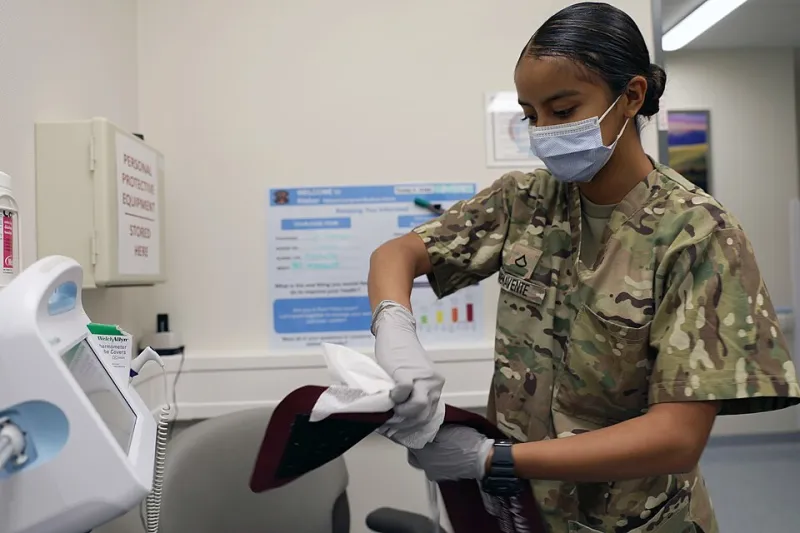
Photo: U.S. Army RHCE by Russell Toof, Public domain, via Wikimedia Commons
There is a document that follows you through every urgent care visit, every specialist referral, every routine physical—and most people have never read a single line of it. Your medical record is, in theory, the definitive account of your health history. In practice, it is often something considerably less tidy: a patchwork of clinical notes, billing codes, lab values, and physician shorthand assembled across years, providers, and health systems that frequently do not communicate with one another.
The gap between what patients believe their doctors know and what is actually documented can be startling. And in certain circumstances, that gap carries real consequences.
What a Medical Record Actually Contains
A complete medical record is not a single file. It is a collection of documents generated at each point of care, and depending on where and how you receive treatment, those documents may live in entirely separate electronic systems. At its most comprehensive, your record includes:
- Clinical notes written by physicians, nurses, and other providers after each encounter
- Problem lists summarizing your active and historical diagnoses
- Medication lists, including current prescriptions and documented allergies
- Lab results and imaging reports from diagnostic testing
- Surgical and procedure histories
- Immunization records
- Referral correspondence between providers
- Insurance and billing codes that translate clinical findings into administrative language
Each of these components is only as accurate as the person who entered it, at the moment they entered it, within the limitations of whatever system they were using. That is a significant number of variables.
Where the Gaps Begin
Consider a common scenario: you see a specialist for a condition, receive a diagnosis, and assume your primary care physician will be informed. In an ideal care environment, a consultation note flows automatically into your primary record. In practice, that communication may arrive weeks later, arrive incompletely, or—particularly if the specialist operates outside your primary provider's health network—not arrive at all.
Fragmentation across health systems is one of the most persistent structural problems in American healthcare. Despite the widespread adoption of electronic health records (EHRs), interoperability between competing platforms remains inconsistent. A hospitalization at one institution, a specialist visit at another, and routine care at a third may generate three entirely separate records with no automatic mechanism for consolidation.
Beyond systemic fragmentation, human factors compound the problem. Physicians work under significant time pressure, and clinical notes are frequently dictated or typed rapidly at the end of a busy session. Details discussed during a visit may not make it into the written record. Conversely, information that was accurate years ago—a medication you stopped taking, a diagnosis that was later revised, an allergy recorded in error—may persist in your record indefinitely, simply because no one updated it.
The Billing Code Problem
One dimension of medical records that patients rarely consider is the role of diagnostic billing codes. When a provider documents your visit, a significant portion of that documentation is shaped by the requirements of insurance reimbursement rather than purely clinical communication. The codes assigned to your encounters—drawn from the International Classification of Diseases (ICD) system—determine what your insurer pays and become part of your permanent health history.
A billing code can be imprecise. A working diagnosis entered to justify a diagnostic test may remain on your record long after that diagnosis was ruled out. A mental health visit billed under a broad code for administrative reasons may appear in your record in ways that do not reflect the actual clinical picture. These coding artifacts can affect future insurance decisions, influence how new providers interpret your history, and occasionally create confusion in emergency settings where clinicians are working quickly from incomplete information.
Your Right to Access and Correct Your Record
Under the Health Insurance Portability and Accountability Act (HIPAA), you have the right to access your medical records from any covered healthcare provider. This right is broad and meaningful, though the process for exercising it varies by institution. Most large health systems now offer patient portal access to at least a portion of your records. For records not available digitally, a formal written request to the provider's medical records department is typically required, and providers generally have 30 days to respond.
You also have the right to request corrections. If you identify information in your record that is inaccurate—a medication you have never taken, an allergy that does not reflect your actual history, a diagnosis that was superseded—you can submit a formal amendment request. Providers are not obligated to delete the original entry, but they are required to note your amendment and attach it to the relevant record. Keeping written documentation of any corrections you request is advisable.
Practical Steps for Informed Record Management
Reviewing your medical records is not a task reserved for moments of crisis. Building familiarity with your documented health history as an ongoing practice is among the more concrete actions available to any patient seeking genuine agency over their care.
Request your records periodically. Even if you feel healthy and your care is routine, reviewing your records every year or two allows you to identify outdated information before it becomes a problem in a high-stakes clinical moment.
Verify your medication and allergy lists at every visit. These lists are among the most frequently outdated elements of a medical record. Take thirty seconds at each appointment to confirm that what your provider sees on screen reflects your current reality.
Ask for visit summaries. Most providers are required under federal rules to provide a clinical summary after each office visit upon request. Reading this document ensures that what you discussed and what was documented are consistent.
Maintain your own health summary. A personal document listing your current diagnoses, medications, allergies, surgical history, and family history—updated and carried to new provider visits—provides a reliable baseline that does not depend on any single institution's record-keeping.
Understand that portal access is not the complete record. Patient portals provide convenient access to a curated subset of your information. Billing records, full nursing notes, and certain historical documents may not appear in a portal view. If you need a comprehensive record, request it directly.
Why This Matters Beyond Convenience
The consequences of an inaccurate or incomplete medical record are not merely administrative. Drug interactions may go unrecognized if a provider lacks a complete medication history. A prior diagnosis may influence a clinician's interpretation of new symptoms in ways that delay an accurate assessment. In emergency settings, where care decisions are made rapidly and the patient may not be able to provide history themselves, the accuracy of the documented record can directly affect outcomes.
Healthcare in the United States is delivered across a complex, decentralized system in which no single entity bears comprehensive responsibility for the coherence of your health information. That reality places a meaningful portion of that responsibility with you. Understanding what your medical record contains—and taking deliberate steps to ensure its accuracy—is not a burden that patients should face alone. But it is, for now, one that informed patients are better equipped to manage.